How Reading Taught Me to Write

I had a lot of trouble learning how to read when I was a kid. I don’t remember how old I was when I finally put the words together, I just remember being the very last kid who could make her way through the jungle of words in a book. None of it made sense to me. I couldn’t grasp how the letters and sounds were supposed to come together and actually mean something. I thought I was stupid and really believed there was something wrong with me. I believed I would never be smart like other people. I hated reading. I hated books. I hated words. I couldn’t spell. I couldn’t even pronounce words correctly. I avoided books and reading because they reminded me of how stupid I thought I was and brought to my attention everything I wasn’t good at.

I was a physical kid—always outside climbing trees and building forts with my brothers. I didn’t want to sit still and learn anything. I believed I couldn’t learn and that I wasn’t smart enough to understand like other people.

But then when I was 11 I picked up a book called The Penny Whistle by B. J. Hoff and something changed inside of me. I have no idea why I picked that book up or cracked it open because it wasn’t something I normally did. I remember loving the illustrations in the book—crisp, detailed pencil drawings that looked like you could touch the page and get graphite on your fingers; perhaps that’s what drew me in. Regardless, it was the words that kept me. Finally, for the first time in my life, words made sense; they ran off the page like water and I drank them up—consumed them one by one to the very last page.

I pulled The Penny Whistle off my bookshelf today—it’s tattered with a piece of tape on the cover. My name is written in black marker on the inside cover with the date July 18, 1997. I flipped through the pages and found the grubby fingerprints off an 11-year-old throughout. The book falls open to my favorite illustration of a tree standing stark against a winter backdrop.

When I held that book today I actually had to stop and take a deep breath to fight back tears. Why? Because that simple little book changed my life. I don’t even remember what the book is really about; the story is lost but the change it brought inside of me remains. When I poured over that book as an 11-year-old girl, I found something inside of myself. I found words. I found ability and intelligence. I found stories. I came alive and knew I had value, capability, and something to share. I went from hating books to loving them—loving the stories held inside two covers. I fell in love with words and began to see them as colors on a palette and the blank page as my canvas. There, reading that book, I fell in love with writing.

When I was a teenager, I remember being sick and bored one day so I cracked open Daddy-Long-Legs by Jean Webster. The name Daddy-Long-Legs amused me and, for no other reason, I started reading. I read the whole book that day without ever putting it down. I’m not an avid reader even now so it means something when I can’t part with a story until it’s finished. I gobbled up each book by Webster and learned one important thing from her stories—the writer’s voice. I don’t know how to describe Jean Webster—her imagination, her childishness, her sharp sense of humor—she wrote like she was having a witty conversation with each of her readers. I fell in love with her style and find now that my own voice in writing grew out of the whimsy I so love in her books.

Even though I struggled through school and language has always been a challenge for me, I have found that reading is the best lesson I ever learned in writing. In reading, I actually see the way language is laid out on a page in sentences and paragraphs. Instead of just hearing about and practicing the proper construction of individual sentences and parts of speech, I can actually visualize and grasp sentence structure as I read. The more I read, the more I learn about writing. The more I write, the more I want to read and learn more and more from the words and characters acting out the world of grammar on the page. I may never be a very good student. I may never be able to fully understand the complexities of the English language. But I do know the more I read the words of good writers, the better writer I too can be.

“The problem was too big for the lot of them. But her mother always maintained that you had to start where you were or you’d never get anywhere at all” (p. 37, The Penny Whistle).

Perspective

I spent Saturday exploring Plymouth, Mass where the Pilgrims first explored this land. In the late afternoon, a storm blew in over the ocean. A fierce wall of slate gray clouds stretched like reaching hands over the face of the water bringing darkness and chill of cold air over everything it touched. I stood by the bay awestruck (and a little scared) by the clouds billowing and changing overhead. There’s no view quite like a storm at sea. You stand by and watch as in slow motion the storm reaches and stretches consuming every sliver of sunshine and blue sky in its path. Huge swaths of rain fall and wave like ribbons. I stand on the bay snapping pictures of the ever-changing sky until the winds blow hard and the drops begin to fall–then it’s a race back to the car before the torrents let loose and all the slate gray from above comes splashing down below.

Today I’m home caught again in the ruckus of a thunderstorm. The rain falls fast and hard as the gray clouds zip by overhead. But today I can’t see the storm–only the rain and the sound of thunder. There’s no panoramic view or way to gain perspective on all that rumbles above. I couldn’t see the storm coming and I don’t know when it will leave.

Isn’t life the same? If only I could stand on the bay and watch life stretch out before me. If only I could see the story beginning to end–dark though it may be and threatening, at least I would know. I would know when to stand in awe snapping pictures of the overwhelming beauty and when to run for cover from the heartache and hurt. But life doesn’t give us warning or panoramic views. Life doesn’t tell us when heartache is coming or when it will leave. We stand in the storm seeing and hearing only the rain and thunder–not the beauty and majesty of the clouds that bring our trouble. I think of the storm at sea, and try to remember that even trouble falls from beauty and brings beauty in its wake. The storm lasts for a season and at times we believe we will be consumed–but we won’t. There is brightness after the rain. Rainbows to bring light, color, and the hope of a promise.

God may come in storm clouds dark, fall on us in trials and pain–but there is beauty in the panorama of it all. If we could stand on the bay and see his plan–see his purpose stretch out in fierce beauty from beginning to end–then we would understand. Then we would be awestruck at his divine plan. We would stand in the falling rain, and though we may be afraid of the storm clouds and thunder overhead, we would see there is a beginning and an end–a purpose stretching with beauty and hope through all the dark clouds and rain drops that beat around us.

Though you stand in the thunderstorm and see no plan. Though your heart is broken and overwhelmed. Know, always know, there is beauty overhead. Know the rain falls from beauty and brings beauty in its wake. Know, always know, there is a plan.

Mad Love

Today I should be writing about something awfully important. But I’m not. I tried you know. But I’ve just been sitting here in a standoff with my computer screen and the two of us (the computer and I) decided it’s best if today I just drink coffee and write something unimportant. I hope you don’t mind. If you do, well, don’t read it genius. So, today, I’m going to just tell you that I have mad love for a few things in life. Isn’t it funny how we all have our likes and dislikes and how our loves and hates make us each the unique people that we are? fascinating :] Here are a few of the things that make me who I am, for better or for worse. I wrote them down in the order they came to me so now you see how cluttered and befuddled my brain is:

Potatoes. coffee. beige. Thoreau. scarves. boots. leather bags. Fossil. Harrison Ford. mocha. Dunkin’ Donuts. books. tea. blogging. brothers. words. nature. birds. Faith. pasta. architecture. paper. Darren. Rachel T. laughter. letters. Ashley B. adventure. dreams. flowers. Quick Trip. Missouri. dirt roads. sweeping plains. moody oceans. the woods. Jean Webster. Daddy-Long-Legs book. Boston. cannoli. Italy. travel. walking. poppies. feta. art. brown gravy. french fries. dresses. ruffles. hugs. warm blankets. fireplaces. the smell of smoke. birch trees. fall. pumpkin spice lattes. black nail polish. camping. flip-flops. green chilies. Anthropologie. OneRebublic. barns. the country. Gilly Hicks. journals. maps. sci-fi. sweaters. jeans. ink. Relevant Magazine. The National Geographic. Prison Break. Little Women. silence. wood floors. colonial houses. Massachusetts. bookstores. cafes. Chipotle. trees. fire flies. flying. clean sheets. American Eagle. home. Pontiac. America. cello. navy. sleep. writing. typing. Cracker Barrel. a clean house. nephews & nieces. pictures. sarcasm. poetry. warm clothes. bacon. tree houses. WordPress. #2 pencils. decorating. creating. honesty. surprises. school. birds singing. fire. black eye liner. rain. seltzer. Arnold Palmers. cheese. olive oil. bread. being left-handed. 7. Twilight. Shakespeare. Hugh Jackman. archaeology. typewriters. vintage. Abercrombie & Fitch. mud. Country Living. The Office. blush pink. canvases. psychology books. home. feathers. gray. Bryan Adams. rotary phones. down blankets. York Peppermint Patty coffee creamer. family. freckles. florals. cider. Pottery Barn. Cavallini. green beans. mom’s fried chicken. spaghetti sauce. blue prints. Brian Regan. murder mysteries. staying up late. mascara. C.S. Lewis. getting packages in the mail. changes. mason jars. Xbox. pie. you. dandelions. red woods. tire swings. typography.

Unfortunately, potatoes outranked both my husband and my faith but at least I’m honest :]

What makes you you?

The Too Busy Church and What it Has to Lose

Church is a very busy place. In addition to the regular Sunday services, many churches also have programs galore for all ages almost every day of the week. The programs alone are not a bad idea; having a Bible study for women or a special activity for teens can go a long way in building relationships both with God and each other. But in trying to be actively involved in church, many families find themselves pulled in a million directions all at once. You worship together as a family on Sunday, mom is gone to a program for ladies on Tuesday, you’re back for prayer meeting on Wednesday, your teenager is dropped off for a youth activity on Thursday, and your 3rd grader is taken to a special program on Friday. Don’t forget the men’s prayer breakfast on Saturday and you’re back again on Sunday morning. And that’s just church stuff–not work, school, or any of the other activities a family participates in.

We have families running, running, running trying to keep up. But what are we keeping up with anyway? With each other? With the expectations of our fellow church members? With God and what we perceive he requires of us? With our own perfectionistic standards? What? Sometimes when we are trying our hardest to do everything right and make everyone happy, we lose sight of what actually matters most. We exchange the busyness of activities about God for quiet time actually spent talking to God. We trade programs intended to build up families for actual time with our families.

Don’t get me wrong; I’m not trying to bash church or any of the opportunities a church offers. I know each program offered is meant to help believers, not hinder them. I love my church family and love the time I get to spend with them. But I also see individuals and families are the building blocks of any church. If families grow too busy to spend time with God and each other, then the building blocks of a church can begin to crumble. A church family is only as strong and healthy as the individual families of which it’s comprised. If families are falling apart because they’re too busy to stop and listen to each other, to solve problems and grow together, what will become of the family of God as a whole?

With all the opportunities and distractions life offers, I only hope we can learn to keep our priorities straight. To love God first–and because we love him and desire to worship him together–to gather in church as the family of God. But in doing so, not to become bogged down and distracted by extra activities that pull us away from what should be our next priority–our families. If we want to honor Christ and worship him together, let’s honor him privately in our individual lives and homes by setting aside all that weighs us down and focus on all that brings us closer to him and the people who matter most. Let’s value our families and the time we spend with them, remembering if we lose our relationships with them, we have already hurt the family of God even if we do show up for church on Sunday.

Night Mail

You want to hear a story? Oh good.

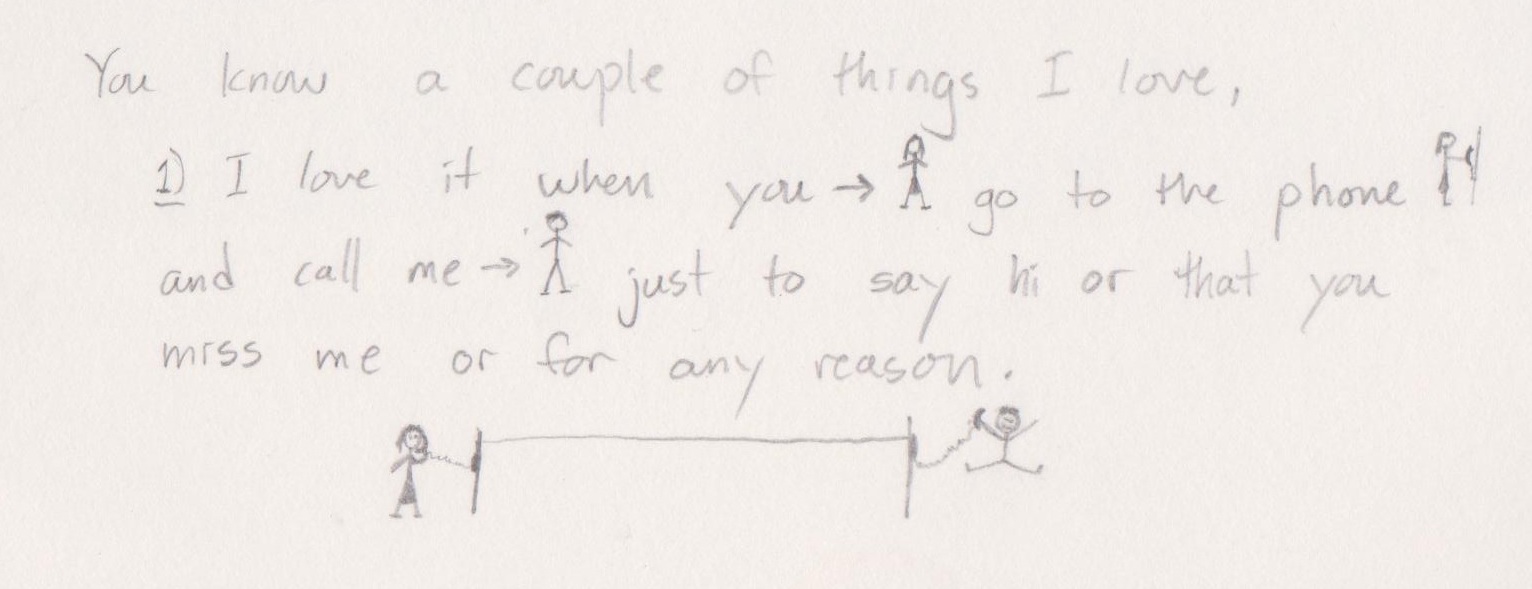
So, the husband and I attended a university where guys and girls still live in separate dorms across campus from each other. You can call it old-fashioned but having separate dorms led to something rather adorable in my book: Night Mail. You see, the guys and girls each had a wooden box rigged up on wheels with a rope on the front to pull it around. In these boxes the students would leave letters and packages addressed to each other and at night, after we were all back in our rooms for curfew, a couple of guys or girls (depending on who’s turn it was) would grab the wooden box and roll it across campus through the dark laughing and giggling about all the love letters and cologne drenched envelopes being sent from one heart to another. Once to the other side of campus, the boxes were exchanged and the letters dropped off in stacks at each of the dormitories. Then a couple more students would take the stacks of letters and slide them under Romeo or Juliet’s door. It was a hoot…and quite romantic, really. I remember how exciting it was when a letter with my name came sliding under the door. I would snatch it up, hop in bed, and pour over the words of the man who would later become my husband. Darren and I now have boxes of letters from our dating days. So much of our relationship is scripted out in the words we wrote back and forth as we came to know and love each other. Darren the artist filled his letters with drawings and illustrations that still make me smile when I come across them. My favorite picture he drew was of me calling him:

The little guy jumping in the air–gets me every time :]

Between night mail and all the time we spent living across the country from each other, written letters became a staple in our relationship–and we still write each other letters today. Sometimes old fashion is the best fashion of all, kids ;]