What Do I Do Now?

“There is a Power, whose care

Teaches thy way along that pathless coast,—

The desert and illimitable air

Lone wandering, but not lost.”
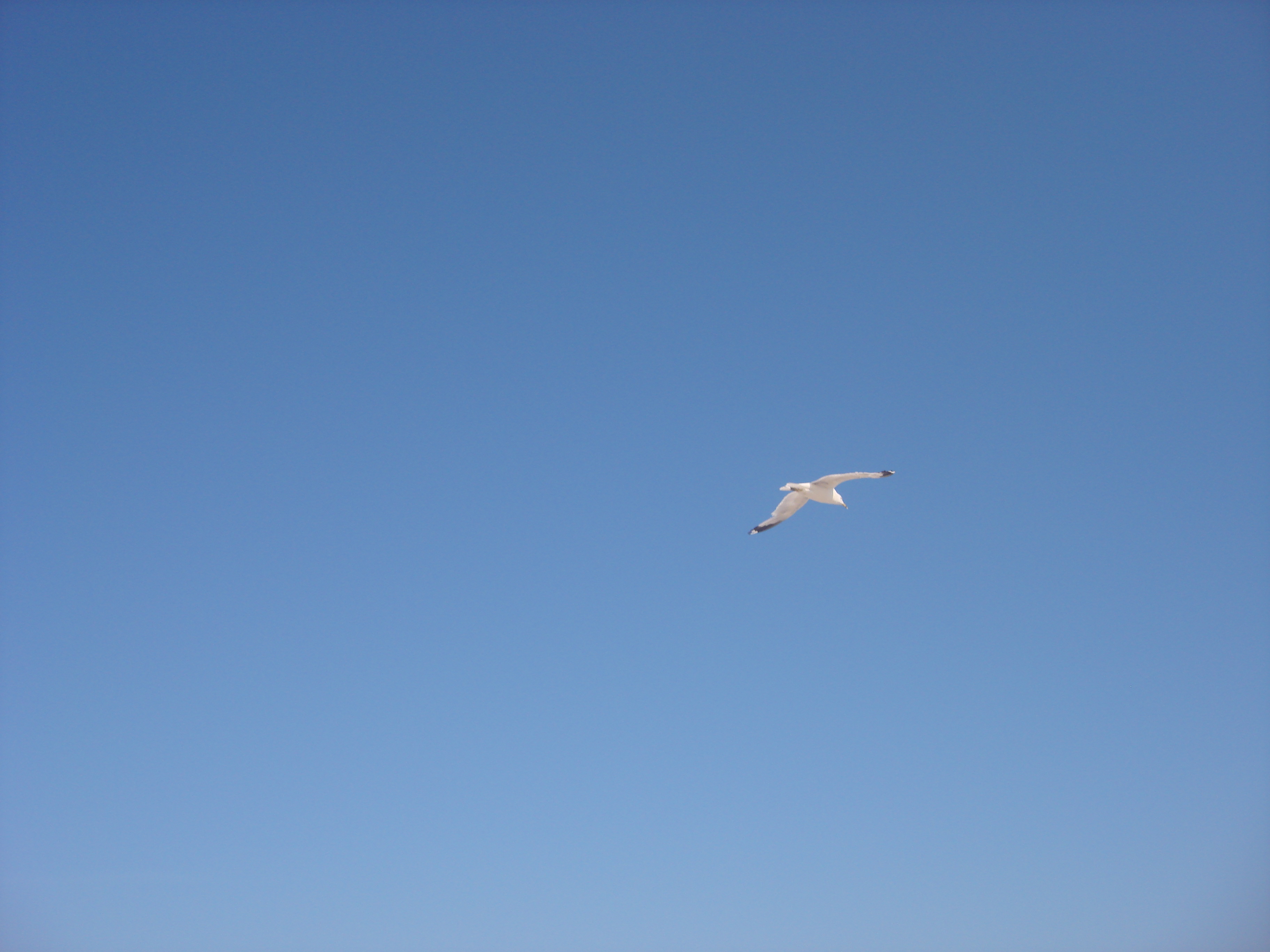
I first studied the poetry of William Cullen Bryant in a college literature course. I didn’t care much for poetry in college because I thought it was hard to read and understand. But even in college I loved this one stanza from Bryant’s poem To A Waterfowl; I especially love the last line of the stanza– “Lone wondering, but not lost.” That is how I sometimes feel–like I’m wondering alone through life lost and confused. It’s good to be reminded that even when I am lonely, I am not truly alone and even when I feel lost, “There is a Power, whose care Teaches thy way along that pathless coast.” Life can certainly feel like a pathless coast. What am I doing? What am I supposed to be doing? What do I do next? What does God want–what is his “will”?
Knowing the will of God is something you hear a lot about but many of the answers you receive are vague and confusing. Some people think God’s will (or plan for your life) is mystical and rooted in some kind of feeling that God is leading you to one thing or the other. Others think God’s will is very precise and concrete and that there are very specific and definite things you should be doing.  Personally, I believe God’s will is very practical and is very  step by step and day by day. I don’t believe I can tell you exactly what God’s will is for me for the rest of my life but I do believe I know what it is for today. For today God’s will is the practical things before me–going to work and doing my best, taking care of our home, being financially responsible so we are able to move forward with our goals and plans, being faithful and obedient to the truth, and so on. I don’t believe God is trying to trick me or hide his plans from me. I believe that as I walk in daily obedience God will daily make my path straight and will show  me what I should be doing little by little.
Today is not the hard part for me–tomorrow is. Tomorrow is hard because I don’t like waiting and I want to know what’s next. Tomorrow is hard because Darren and I are thinking through some big decisions that will change all of our tomorrows and it’s not easy not knowing exactly what is best and which path we should take.  One decision could affect all of the others and may possibly change the course we’re on forever–that’s scary and it’s a big responsibility. When I’m struggling with knowing what to do next and worried about making a mistake, the last stanza of Bryant’s poem comforts me:
“He, who, from zone to zone,
Guides through the boundless sky thy certain flight,
In the long way that I must trace alone,
Will lead my steps aright” (Italics mine).
Sometimes decisions are hard to make and it’s not easy knowing what to do next, but in these moments I believe God simply wants me  to look to him and trust that he “Will lead my steps alright.” I need to pray, obey, do the best that I know how to every day one step at a time–and trust that God will take care of the rest.
Here’s the complete poem that I have been referring to:
To A Waterfowl

Whither, ‘midst falling dew,

While glow the heavens with the last steps of day,
Far, through their rosy depths, dost thou pursue
          Thy solitary way?
Vainly the fowler’s eye
Might mark thy distant flight, to do thee wrong,
As, darkly seen against the crimson sky,
Thy figure floats along.
Seek’st thou the plashy brink
Of weedy lake, or marge of river wide,
Or where the rocking billows rise and sink
On the chaféd ocean side?
There is a Power, whose care
Teaches thy way along that pathless coast,—
The desert and illimitable air
Lone wandering, but not lost.
All day thy wings have fanned,
At that far height, the cold thin atmosphere;
Yet stoop not, weary, to the welcome land,
Though the dark night is near.
And soon that toil shall end,
Soon shalt thou find a summer home, and rest,
And scream among thy fellows; reeds shall bend,
Soon, o’er thy sheltered nest.
Thou’rt gone, the abyss of heaven
Hath swallowed up thy form, yet, on my heart
Deeply hath sunk the lesson thou hast given,
And shall not soon depart.
He, who, from zone to zone,
Guides through the boundless sky thy certain flight,
In the long way that I must trace alone,
Will lead my steps aright.”

Simplifying

A bird sings quietly in the trees outside my house. The sky is a vain shade of cobalt blue and without a cloud or sigh of winter. I have all this technology at my fingertips—a computer with high-speed internet, an IPod filled with my favorite music and apps, a TV with my favorite shows, a camera to take pictures, Facebook to share my life with family and friends…and yet a bird’s song outdoes them all. No song on my IPod is as lovely as that bird’s song, no picture I take with my camera can compare to the blue sky beauty just outside my window, no interaction on Facebook or text can compare to an interaction with nature—a walk in the woods, a swim in the ocean, or a gaze at the stars. Technology clutters my life; nature feeds my soul.

Henry David Thoreau was wiser 150 years ago than we are today. “Men have become the tools of their tools” (Walden p. 33), he said–and he said so before all the technology of today. What have we become? Technology serves its purpose, of course; I could not share these thoughts with you in this way were it not for computers and internet. But too often I lose my way and let my interactions with technology replace my interactions with God, man, and nature. Thoreau said, “I went to the woods because I wished to live deliberately, to front only the essential facts of life, and to see if I could not learn what it had to teach, and not, when I came to die, discover that I had not lived” (Walden p. 74). What could I learn about God, myself, and the people around me if I were to wake up from the stupor of technology and live deliberately?

de•lib•er•ate (adv., de•lib’er•ate•ly)

v. 1.To consider carefully and at length. 2. To take counsel together so as to reach a decision. 3. To think about or consider carefully; weigh. adj. 1. Carefully thought out; intentional. 2. Slow and cautious in determining or deciding. 3. Leisurely in movement or manner; unhurried; slow.

Syn. 1. Deliberate, ponder, reflect, meditate, and muse mean to think deeply, usually in silence (As defined by the Funk & Wagnalls Standard College Dictionary).

How much more could I enjoy this quiet little life I’ve been given were I to step out of the bonds of technology and into the sanctuary of nature—if I were to deliberate, ponder, reflect, meditate, and even muse upon the stunning beauty of the world around me? Today I read for the first time William Cullen Bryant’s A Forest Hymn–it is stunning. I would love to share the whole poem but it’s rather long so I omitted lines here and there:

“The groves were God’s first temples. …

Amid the cool and silence, he knelt down,

And offered to the Mightiest solemn thanks

And supplication. …

Ah, why

Should we, in the world’s riper years, neglect God’s ancient sanctuaries, and adore

Only among the crowd, and under roofs

That our frail hands have raised? Let me, at least,

Here, in the shallow of this aged wood,

Offer one hymn …

Father, thy hand

Hath reared these venerable columns, thou

Didst weave this verdant roof. Thou didst look down

Upon the naked earth, and, forthwith, rose

All these fair ranks of trees. They, in thy sun,

Budded, and shook their green leaves in thy breeze,

And shot toward heaven.

till, at last, they stood,

As now they stand, massy, and tall, and dark,

Fit shrine for humble worshipper to hold

Communion with his Maker. These dim vaults,

These winding aisles, of human pomp or pride

Report not. No fantastic carving show

The boast of our vain race to change the form

Of thy fair works. But thou art here—thou fill’st

The solitude. Thou art in the soft winds

That run along the summit of these trees

In music; thou art in the cooler breath

That from the inmost darkness of the place

Comes, scarcely felt; the barky trunks, the ground,

The fresh moist ground, are all instinct with thee.

Here is continual worship;—Nature, here,

In the tranquility that thou dost love,

Enjoys the presence. Noiselessly

Thou hast not left

Thyself without a witness, in the shades,

Of thy perfections. Grandeur, strength, and grace

Are here to speak of thee.

My heart is awed within when I think

Of the great miracle that goes on,

In silence, round me—the perpetual work

Of thy creation, finished, yet renewed

Forever. Written on thy works I read

The lesson of thy own eternity.

let us [not] need the wrath

Of the mad unchained elements to teach

Who rules them. Be it ours to meditate,

In these calm shades, thy milder majesty,

And to the beautiful order of thy works

Learn to conform the order of our lives.”

How stunning would it be to step away from our loud, busy worlds and see creation the way Bryant did? Get me to the woods.

The Edges of His Ways

All the thunder and lightning and unpredictability of bad weather terrify me but the thunder and lightning are just the edges of the storm–the real story is above the clouds. I love flying above storms. The way the lightning billows through the clouds and seemingly sets the sky aflame is majestic. I’m not afraid of storms when I see them from above–when I see the whole picture. We only get to see the edges of God’s ways not the whole picture. Sometimes life terrifies me–I don’t know what’s going to happen next or what I’m supposed to do. If I could see the whole picture I might not be so be afraid–but I can’t. I must learn to believe that beyond my sight, the story has already been written and a plan is working its way out.  I must believe that the edges of God’s ways are enough for now and someday I will see the whole story from above–and it will be a majestic story of sovereign grace and love.

“Rock of my heart and my Fortress Tower,

Dear are Thy thoughts to me,

Like the unfolding of leaf or flower

Opening Silently.

And on the edges of these Thy ways,

Standing in awe as heretofore,

Thee do I worship,

Thee do I praise,

And adore.

Rock of my heart, and my Fortress Tower,

Dear is Thy love to me,

Search I the world for a word of power, Find it at Calvary—

O deeps of love that rise and flow

Round about me and all things mine,

Love of all loves, in Thee I know

Love Divine.”

-Poem by Amy Carmichael (italics mine)

Dealing With Regret

“It could have all turned out differently, I suppose. But it didn’t.” Jane Austen in Mansfield Park

Jane Austen was a master at studying and communicating human nature through the written word. This one sentence speaks volumes to me, simply, because it quiets so many of the “would have, could have, should have been” thoughts that haunt us about past mistakes and missed opportunities. It is true, the smallest change in circumstances could have changed everything–but it didn’t and nothing is accomplished by wishing it had.

My grandma told me a story about my great-grandparents flipping a coin to decide whether they would move from Kansas to Colorado or Missouri. The coin landed on the Missouri side and so every generation following them also lived in Missouri. At the flip of a coin I could have been a Colorado girl, or perhaps, not been at all–but I am and I am a Missouri girl–nothing can change that, for better or worse.

The same is true when my husband and I were deciding where to live after we got married. I didn’t want to stay in Missouri and he didn’t want to stay in Maine so, on a whim, we chose Massachusetts. We could have chosen any place any where and everything could have turned out differently–but it didn’t. The whole of our married lives hinged on the not-very-well thought out whims of two 20 something year olds who knew nothing about the impact that decision would make–but it was made and it cannot now be unmade (and fortunately, it was not a mistake!).

Quite simply, we must not live our lives in the past, ever dwelling on how things could have turned out differently–if only. There is no “if only”; there is only today.

“Two roads diverged in a yellow wood,

And sorry I could not travel both

And be one traveler, long I stood

And looked down one as far as I could

To where it bent in the undergrowth;

Then took the other, as just as fair,

And having perhaps the better claim,

Because it was grassy and wanted wear;

Though as for that the passing there

Had worn them really about the same,

And both that morning equally lay

In leaves no step had trodden black.

Oh, I kept the first for another day!

Yet knowing how way leads on to way,

I doubted if I should ever come back.

I shall be telling this with a sigh

Somewhere ages and ages hence:

Two roads diverged in a wood, and I–

I took the one less traveled by,

And that has made all the difference.”

-Robert Frost

Missouri’s Quiet Lure

People here in New England often ask me why anyone would live in Missouri; that always makes me smile. They also ask me where Missouri is as they stare blankly trying to picture the United States map and the location of the (rather large, right in the dead center) state…somewhere…but where? Not that New Englanders aren’t smart enough to actually locate Missouri…it just escapes them due to its total lack of interest. The descriptions of Missouri that I have so far received from people who have never been there are as follows:

Flat, windy, tornado-ridden waste land that is hot and dry. Often mistaken with Kansas as if they are one entity. A place with no trees, water, or hills primarily housing cows and corn fields.

With this hellish vision in mind, can you blame them for blocking it out of their memory of the US map?

Like New England is stereotyped for its winters, Missouri is stereotyped for its nothingness. And like most stereotypes, it is wrong.

I suppose much of what is listed in that rather bleak description of Missouri is factually correct—it is flat, windy, and tornado ridden—but that’s not all. It also embodies the Ozarks which are studded with mountains, rivers, and caves—not at all flat or dry. And some of the things people make sound so awful are my most loved memories.

I grew up on a 24 acre farm in what we like to call the middle of nowhere. Our driveway was a quarter of a mile long and winding from our yellow farmhouse  set in the middle of the fields to a gravel road leading to Higginsville and Lexington. Being situated between a gravel road and farm land provided a lot of dust. Dust. Dry feathery dirt. But without dust, there is no sunset, not one to revel in at least. I remember the sunsets in Missouri being nothing but epic. When you combine all that dust with heavy storm clouds, you get the brightest shades of pink and orange and the darkest violets and navies all mingling together with the fleeting sun in one last hurrah each night.

Like the dust, the endless corn fields too held a little bit of magic. The places where the tractor turned while seeding left perfect bare circles in the middle of all that tall corn. I would go out to the fields at night and lay on the dirt in one of those circles gazing up at the night sky so clear and bright you could pick out the star formations. I was lost in an ocean of corn and that little bare circle was my secret castle among the endless rolling Plains.

Next to our house was a field no one farmed that grew tall with prairie grass. I remember lying in that grass, watching it rock like the ocean’s waves all around me. It didn’t feel empty or desolate, just quiet and vast. William Cullen Bryant captures my thoughts in his own writings about the Midwest:

The Prairies

“These are the gardens of the Desert, these

The unshorn fields, boundless and beautiful,

For which the speech of England has no name—

The Prairies. I behold them for the first,

And my heart swells, while the dilated sight

Takes in the encircling vastness. Lo! They stretch

In airy undulations, far away,

As if the Ocean, in his gentlest swell,

Stood still, with all his rounded billows fixed,

And motionless forever. Motionless?—

No—they are all unchanged again. The clouds

Sweep over with their shadows, and, beneath,

The surface rolls and fluctuates to the eye;

Dark hollows seem to glide along and chase

The sunny ridges. Breezes of the South!…”

I keep this poem on the bookshelf in my living room because it calls my heart back home and reminds me of those quiet days when I all I had to do was lay in the grassy field and watch the clouds go by.

All these thoughts about Missouri were stirred up when I saw a picture my mom posted on Facebook of the Katy Trail in Rocheport, Missouri. How many miles have I walked and ridden on this trail! The Katy Trail is a 237 mile railroad track that was covered over with crushed limestone and converted into a walking/biking trail. I had all but forgotten about this trail until I saw my mom’s picture of that familiar tunnel. Now my legs are aching for a long jog down this forgotten path.

Every place has its lure; you just have to go there and find it. Check out the link below for more information on the Katy Trail:

Bike the Katy Trail