I had a lot of trouble learning how to read when I was a kid. I don’t remember how old I was when I finally put the words together, I just remember being the very last kid who could make her way through the jungle of words in a book. None of it made sense to me. I couldn’t grasp how the letters and sounds were supposed to come together and actually mean something. I thought I was stupid and really believed there was something wrong with me. I believed I would never be smart like other people. I hated reading. I hated books. I hated words. I couldn’t spell. I couldn’t even pronounce words correctly. I avoided books and reading because they reminded me of how stupid I thought I was and brought to my attention everything I wasn’t good at.
I was a physical kid—always outside climbing trees and building forts with my brothers. I didn’t want to sit still and learn anything. I believed I couldn’t learn and that I wasn’t smart enough to understand like other people.
But then when I was 11 I picked up a book called The Penny Whistle by B. J. Hoff and something changed inside of me. I have no idea why I picked that book up or cracked it open because it wasn’t something I normally did. I remember loving the illustrations in the book—crisp, detailed pencil drawings that looked like you could touch the page and get graphite on your fingers; perhaps that’s what drew me in. Regardless, it was the words that kept me. Finally, for the first time in my life, words made sense; they ran off the page like water and I drank them up—consumed them one by one to the very last page.
I pulled The Penny Whistle off my bookshelf today—it’s tattered with a piece of tape on the cover. My name is written in black marker on the inside cover with the date July 18, 1997. I flipped through the pages and found the grubby fingerprints off an 11-year-old throughout. The book falls open to my favorite illustration of a tree standing stark against a winter backdrop.
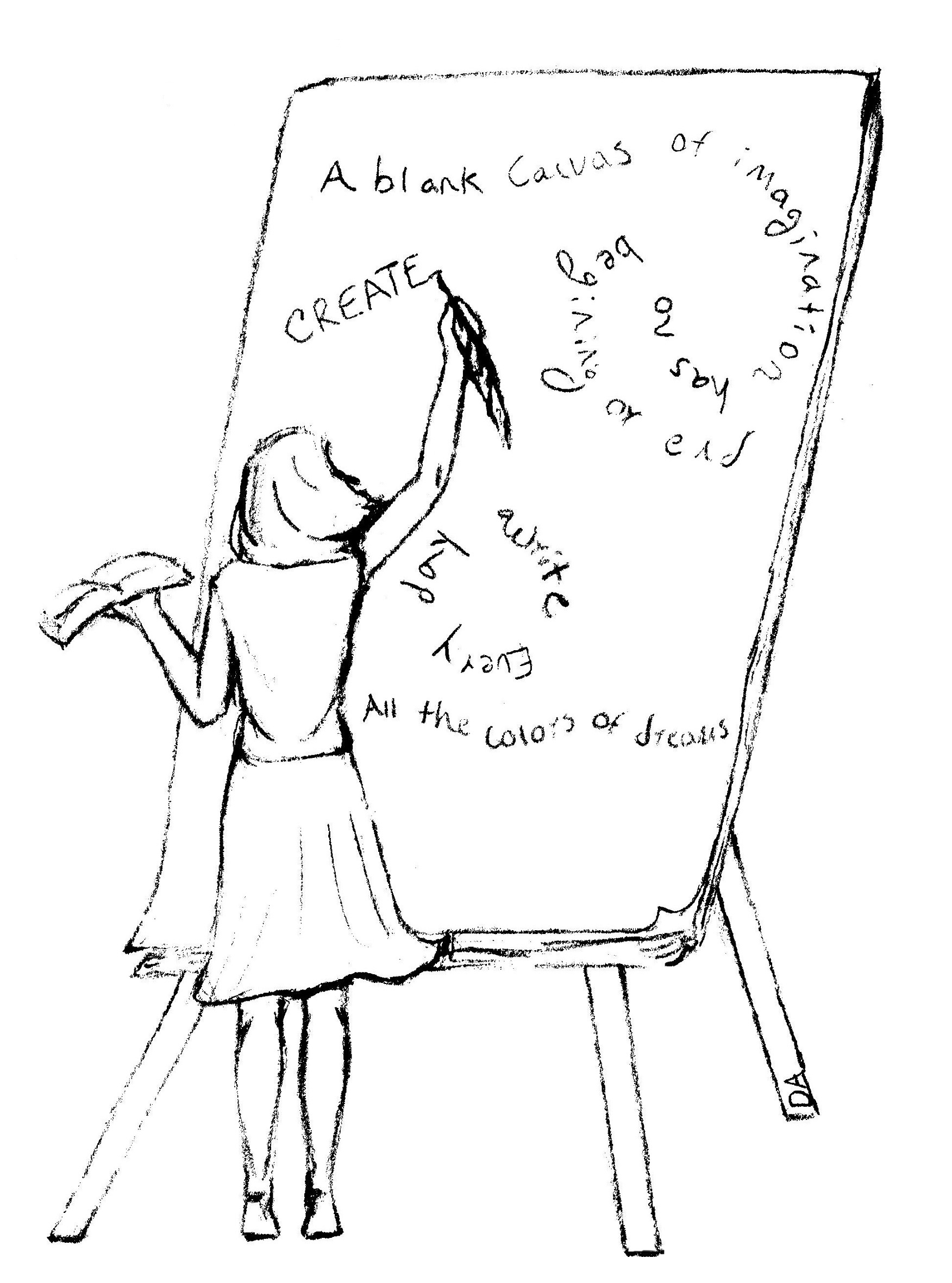
When I held that book today I actually had to stop and take a deep breath to fight back tears. Why? Because that simple little book changed my life. I don’t even remember what the book is really about; the story is lost but the change it brought inside of me remains. When I poured over that book as an 11-year-old girl, I found something inside of myself. I found words. I found ability and intelligence. I found stories. I came alive and knew I had value, capability, and something to share. I went from hating books to loving them—loving the stories held inside two covers. I fell in love with words and began to see them as colors on a palette and the blank page as my canvas. There, reading that book, I fell in love with writing.
When I was a teenager, I remember being sick and bored one day so I cracked open Daddy-Long-Legs by Jean Webster. The name Daddy-Long-Legs amused me and, for no other reason, I started reading. I read the whole book that day without ever putting it down. I’m not an avid reader even now so it means something when I can’t part with a story until it’s finished. I gobbled up each book by Webster and learned one important thing from her stories—the writer’s voice. I don’t know how to describe Jean Webster—her imagination, her childishness, her sharp sense of humor—she wrote like she was having a witty conversation with each of her readers. I fell in love with her style and find now that my own voice in writing grew out of the whimsy I so love in her books.
Even though I struggled through school and language has always been a challenge for me, I have found that reading is the best lesson I ever learned in writing. In reading, I actually see the way language is laid out on a page in sentences and paragraphs. Instead of just hearing about and practicing the proper construction of individual sentences and parts of speech, I can actually visualize and grasp sentence structure as I read. The more I read, the more I learn about writing. The more I write, the more I want to read and learn more and more from the words and characters acting out the world of grammar on the page. I may never be a very good student. I may never be able to fully understand the complexities of the English language. But I do know the more I read the words of good writers, the better writer I too can be.
“The problem was too big for the lot of them. But her mother always maintained that you had to start where you were or you’d never get anywhere at all” (p. 37, The Penny Whistle).




 Outside Air